Helping lost pets get home, with a community that drops a pin and an AI vet for the ones who are hurt
Role
UI/UX designerAcademic project
Field
Pet tech and animal welfare
Timeline
3 months
Tools
Figma, Gemini
The brief
When a pet goes missing, owners have no fast way to raise the alarm, and the kind strangers who find one have no way to reach its family.
ReportLet an owner raise the alarm about a missing pet in minutes.
ReuniteHelp someone who spots a pet check whether it is already reported missing.
CareGuide anyone through first aid for an injured animal.
The problem
What problem did I come across?
As a passer-by
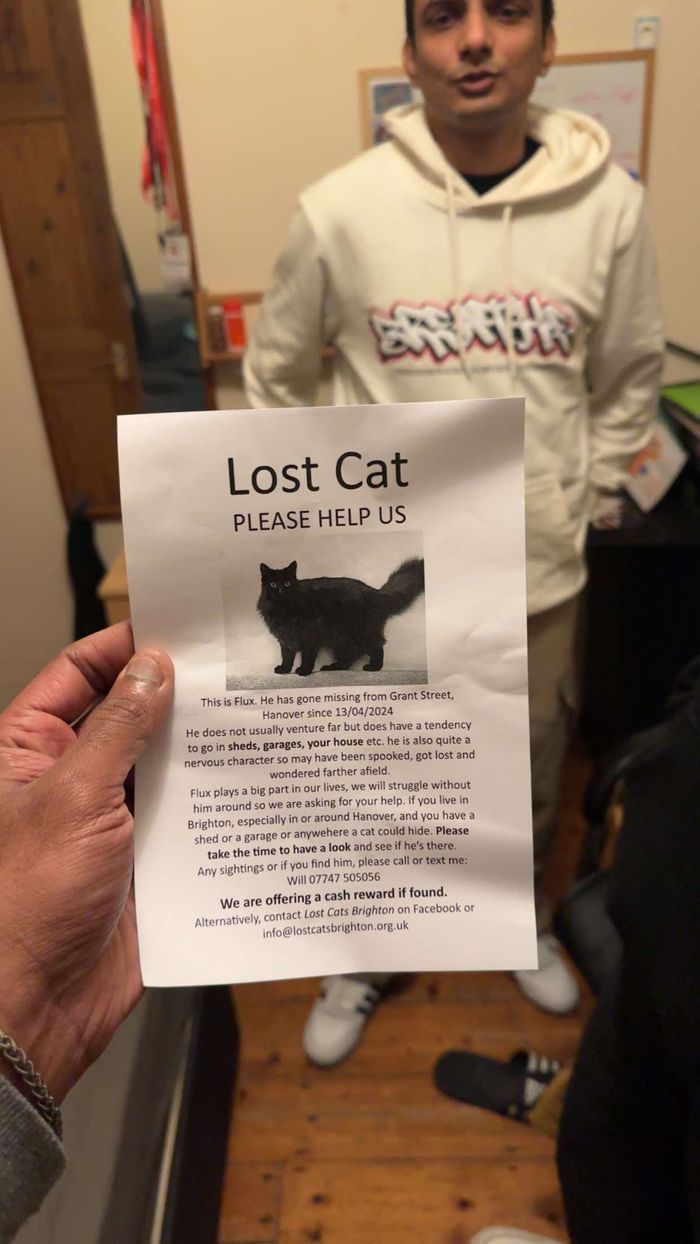
When I first moved to Brighton, I noticed so many cats and dogs roaming the streets, wearing collars, clearly someone's pet. I wanted to help, but I had no way to contact the owner. I didn't know if they were lost or just out on their own, and without a system in place, I felt completely helpless.
As an owner
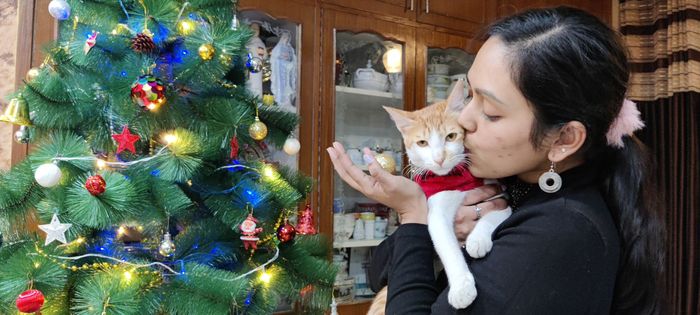
I've also been on the other side of this. Back in India, my cat ran away and was missing for a month. I searched everywhere, but there was no real way to track her down. All I could do was wait and rely on patience, an agonising experience no pet owner should have to go through.
The core problem
Pet owners lack an efficient way to locate their missing pets, while kind strangers who find them have no direct way to reach the owners.
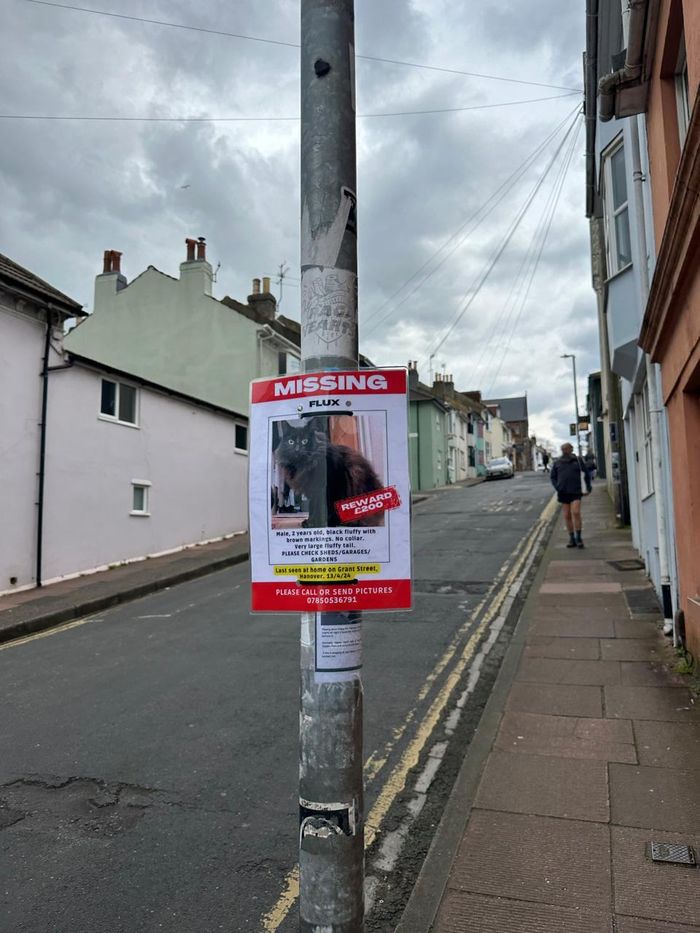
Existing solutions, like posters, social media posts and microchips, are often unreliable, slow, or out of reach for people who genuinely want to help.
Research
How did I identify the problem?
Before designing anything, I needed to know whether my experience was unusual or the norm, and why so few lost pets ever make it home. I split the research into two parts: secondary research to understand the problem at scale, and primary research to hear from the people who had lived through it.
Secondary research
I studied what owners who lost their pets, and strangers who found them, had already shared, to see what worked and where existing solutions fall short.I explored research papers, articles and YouTube testimonials from owners who lost their pets and strangers who found them, to see what worked and where existing solutions fall short.
owners have microchipped their pets. The answer had to work without one.
Dogs only22%
of lost dogs are reunited with their families.
+52% with a microchip
Cats only<2%
of cats without a microchip get home.
20× more likely with one
Out of 100 pets
Compiled from published research on ResearchGate, Google Scholar, ScienceDirect and more.
Primary research
To hear it first-hand, I sent questionnaires across India and the UK to capture different cultural perspectives on pet recovery, then interviewed University of Brighton students about their own experiences with lost pets.
40
peopletook part
34
questionnaires
6
one-to-oneinterviews
What participants did when their pet went missing
Most owners waited, or walked the streets looking.
Lost cat owners waited for their pet to return81%
Searched the neighbourhood67%
Found their pet through a microchip36%
Were contacted through an ID tag24%
Put up posters19%
Contacted animal shelters10%
Contacted local vets8%
Searched for their pet online5%
Something else2%
What participants suggested
Across the questionnaires and interviews, what people asked for narrowed down to three things.
"A quick way to check if a found pet is already reported missing, maybe with AI photo recognition."
"An instant alert that notifies nearby users when a pet goes missing."
"A shared map where people can pin last-seen locations."
Problem statement
How might we help anyone who spots a lost pet drop a pin, so its owner hears about it in minutes?
User personas
Who are my users?
Each persona stands on a different side of the same moment.
Tap a person to open their profile
Pet owner
Liam Carter
28 yearsSoftware developerManchester, UK
When Tuffy went missing, I felt lost and had no idea where to start looking.
Liam lives with his dog, Tuffy, who loves long walks and exploring nearby parks and trails. Tuffy is family, and Liam often worries about him wandering too far.
Goals
Find Tuffy quickly with a real-time tracking tool.
Verify found pets instantly to confirm it's Tuffy.
Spread the word locally and stay updated on sightings.
Technology
Computers
Mobile phones
GPS and tracking
Frustrations
No clear starting point when Tuffy goes missing.
Social media and posters take too long.
No real-time updates or alerts.
Concerns
Tuffy being lost too long without action.
Misidentification in scattered reports.
No structured recovery process.
Pet finder
Chloe Harper
32 yearsPhotographerMiddlesbrough, UK
I found a cat wandering alone, and I want to help, but I have no idea who the owner is or what to do next.
Chloe often comes across stray or lost animals while working on location. One day she found a cat with no tag or contact details. Her social media posts went unnoticed.
Goals
Tell quickly if the cat is truly lost or just roaming.
Contact the owner without relying on social media, and verify them.
Keep the cat safe until the owner is found.
Technology
Computers
Mobile phones
GPS and tracking
Frustrations
No easy way to check if a cat is lost.
Unclear next steps after finding an animal.
No time or means to care for it indefinitely.
Concerns
No way to know if the owner is searching.
Where to take the cat if no owner turns up.
The cat's health, with no medical history.
Stranger
Marcus Reid
36 yearsDelivery driverCanterbury, UK
I don't know how badly the pet is hurt or who it belongs to. I just want to help the right way.
Marcus finds an injured dog by the roadside and isn't sure how serious it is. With no ID or microchip, finding the owner seems impossible, and vet care could be costly.
Goals
Judge the injury quickly to know how urgent it is.
Get veterinary guidance without delay.
Get the dog proper care without a big bill.
Technology
Computers
Mobile phones
GPS and tracking
Frustrations
Unclear where to take the dog or who to call.
Vet care is expensive with no owner to pay.
Concerns
Can't tell if the dog has an owner or is a stray.
How long to wait before calling a shelter.
That nobody will respond to his efforts.
Structure
How do I plan to approach this problem?
Task analysis
Task analysis breaks a goal down into the tasks, sub-tasks and steps a person takes to reach it. I created one for someone reporting a lost cat they found to determine the essential actions, the order they happen in, and where the flow branches.
User A kind stranger who found a pet cat on the streetTask Report the lost cat on Paw Pins
0Reporting a lost cat you found
Do 1.1, then 1.2 if a report exists, or 1.3
1.1Setting up an account
Then 2.1 and 2.3, or 2.2
2.1Sign up
2.2Log in
2.3Set up preferences
1.2Following up on an existing report
2.4Update the existing details
3.1, then 3.2
3.1Upload the last known location
3.2Upload the last seen photo
2.5Contact the reporter
1.3Write a new report
Plan: 2.6 to 2.9 in order
2.6Write the description of the animal
3.3, then 3.4, then 3.5
3.3Mention breed
3.4Mention colour
3.5Mention any distinguishing features
2.7Upload photo
2.8Mark the last known location
2.9Review and submit
GoalTaskSub-taskStepOrder of actions
Information architecture
Information architecture is the structure of an app: what content lives where, and how people move between it. I created it to determine the main navigation, group every feature from the research under it, and keep reporting one tap away.
Onboarding
RegisterLogin
Homepage
Missing
View missing pets
Filter and search
AI match with sightings
Comment on a report
Contact the reporter
Enable alerts
Sightings
View spotted animals
Filter and search
AI match with missing pets
Comment on a report
Contact the reporter
Enable alerts
Reunions
View reunions
Filter and search
Interact with the post
AI Vet
Scan an injured animal
First-aid advice
Find a vet clinic
Contact a vet
Profile
Manage user details
Manage pet details
View reports
Notification settings
Privacy preferences
Log out
Add a report
Missing pet
Select the pet
Update saved details
Or a new pet report: photo, species, breed, details
Last seen date
Last seen location
Write more details
Found animal
Upload a photo
Select the breed
Notifications
Lost and found updates
Nearby pet alerts
Report status updates
Chats
Message users
AI chatbot
Solution
How did I shape the solution?
With the structure in place, I sketched low-fidelity wireframes to compare options, then built a design system to keep every screen consistent. Then formative usability testing on the first high-fidelity design to find what wasn't working. Finally, the fixes went into a working prototype you can try below.
Wireframes and key decisions
I started with low-fidelity wireframes of the key screens, comparing options side by side before committing to one.
ConsideredMap-first homeChosenList-first home
01
A list first, with the map one tap away
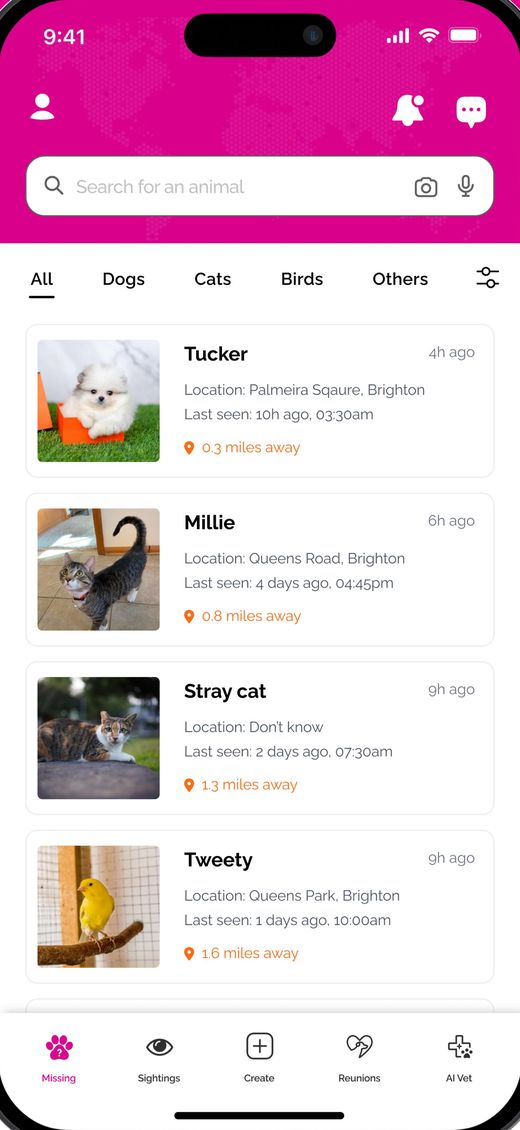
A map looks right for lost pets, but people scanning for their pet need the photo, name and when it was last seen. A list shows all of that at once and works one-handed, so the map moved to each pet's details.
ConsideredOne long formChosenShort steps
02
Guided steps, not one long form
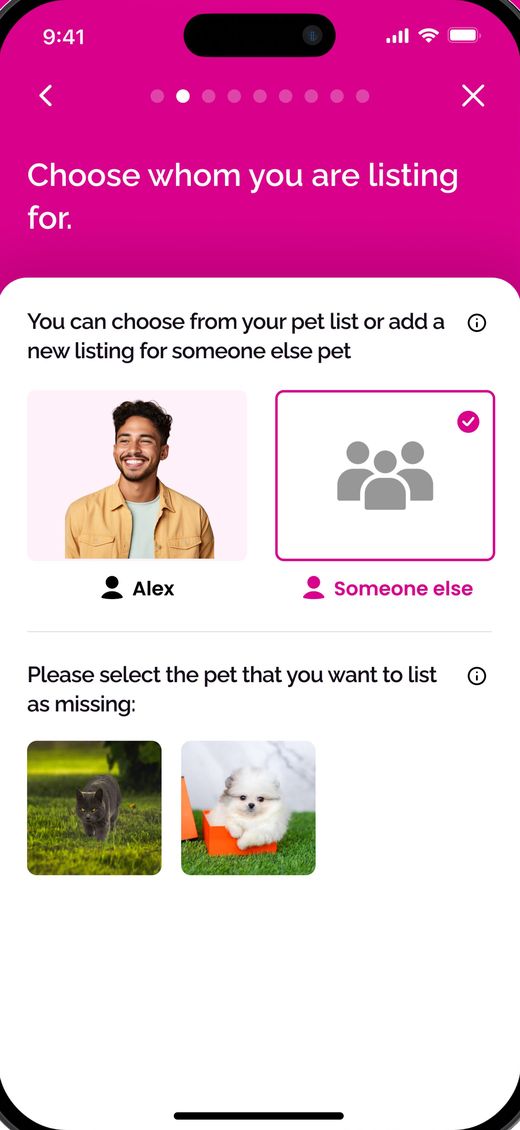
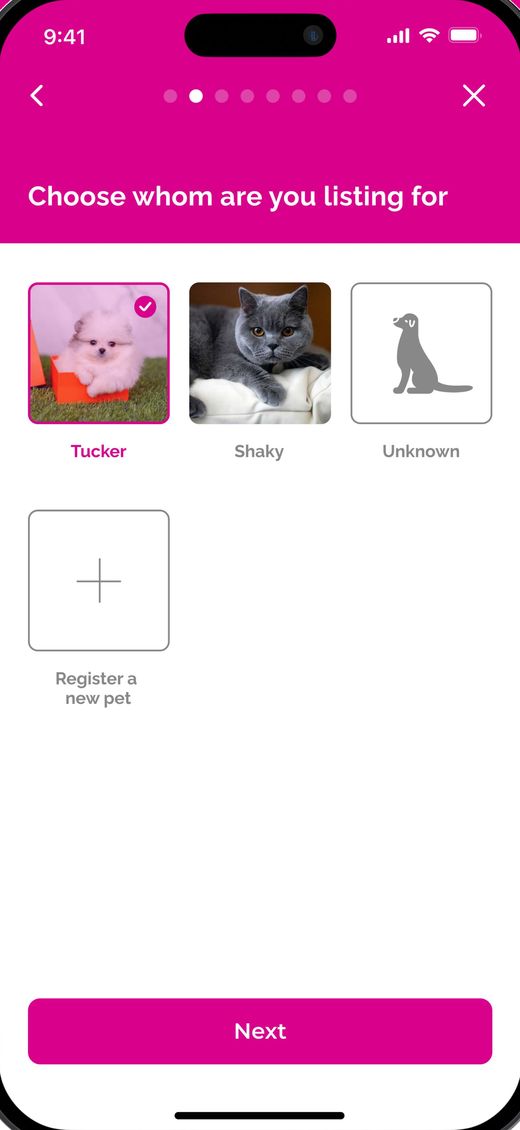
An owner reporting a missing pet is anxious. Short steps with a progress bar keep each screen to one question, and details are filled in from the pet's profile so there is less to type.
ConsideredPhone number on the reportChosenIn-app message
03
Message in the app, not a phone number
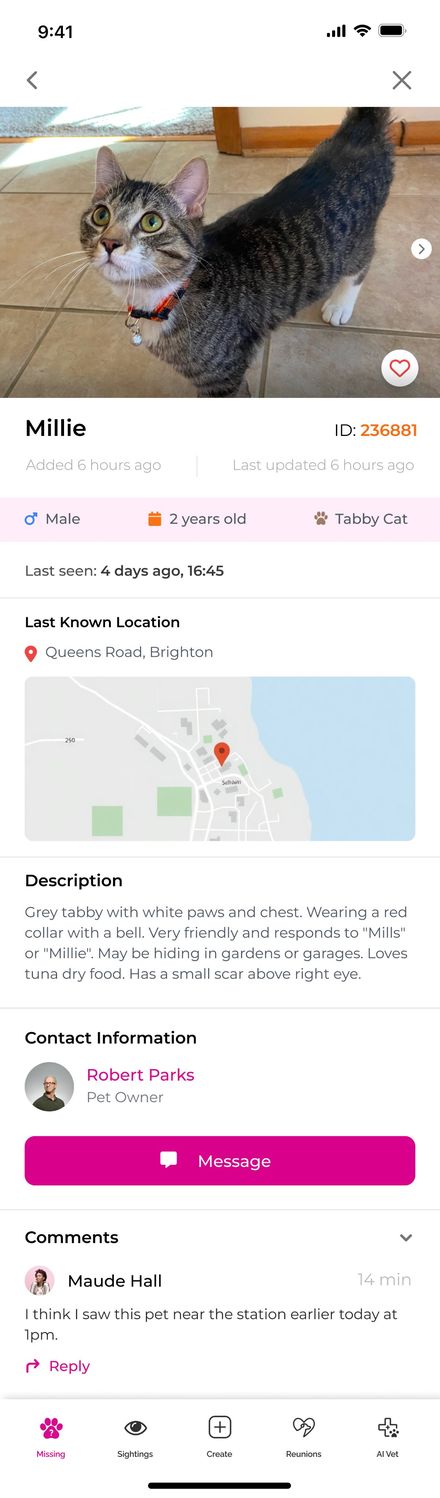
Showing a number exposes the owner to strangers and spam. Messaging inside Paw Pins keeps both sides private and keeps the conversation tied to the report.
Design system
RalewayRalewayHeadings and bodyPoppinsPoppinsLogo and tagline
Components
Primary buttonMain call to action
NextDefault
NextHover
Secondary buttonSupporting action
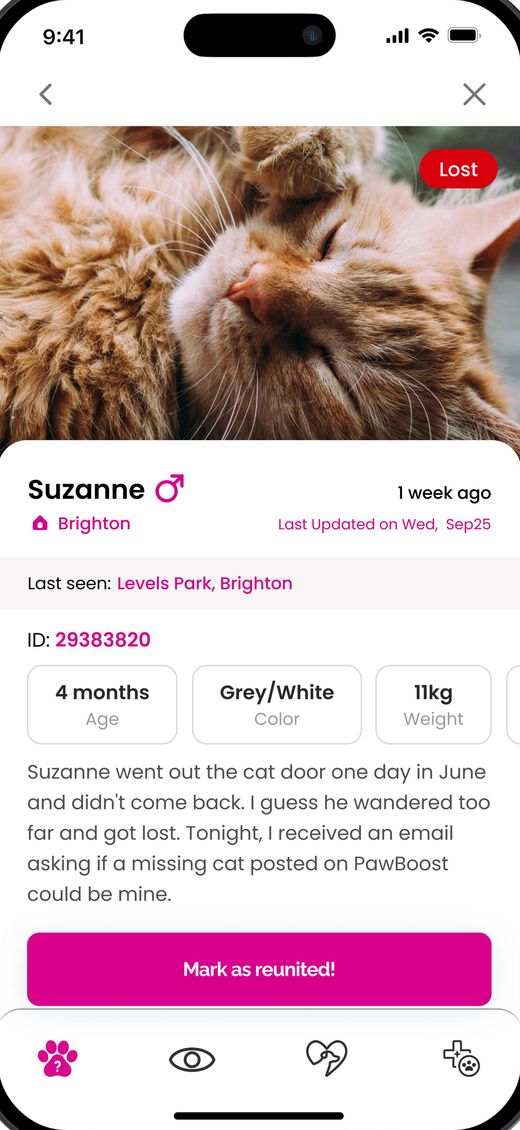
Mark as reunitedDefault
Mark as reunitedHover
IconsTab bar and actions
Missing
Sightings
Create
Reunions
AI Vet
Profile
Search
Location
Formative testing and iterations
Formative usability testing on the first high-fidelity prototype surfaced 17 usability issues across four key screens, each one addressed in the next design iteration. Select an issue to see where it was and how it was fixed.
Before
12345
After
12345
Before
13458
After
12345678
Before
12
After
12
Before
12
After
12
Working prototype
The final design, rebuilt so you can use it. Pick a flow and tap through it. The notes follow along, and a blue circle flashes on the next thing to try and on the tab bar.
This flow
Get started
9:41
Paw Pins
Spot A Paw, Drop A Pin, Let The Search Begin!
Tap to begin
9:41
Lost pets, found fast.
Quickly report lost or found pets, get real-time updates and help reunite pets with their owners.
9:41
AI Vet, to the rescue.
Get quick access to AI veterinary support, find nearby clinics and make sure pets receive the care they need.
9:41
Join the community
Sign up to start reporting pets, receiving updates and helping animals in need.
9:41
Welcome Back
Or login with
Don't have an account?
9:41
Let's Register
Must contain 8 characters
Or register with
Already have an account?
9:41
Get Verified
Didn't receive a code?
Sign In Successful
Welcome to Paw Pins, Liam.
9:41
9:41
9:41
ReunionsPets that made it home
9:41
9:41
Choose what you want to report
9:41
Choose whom you are listing for
9:41
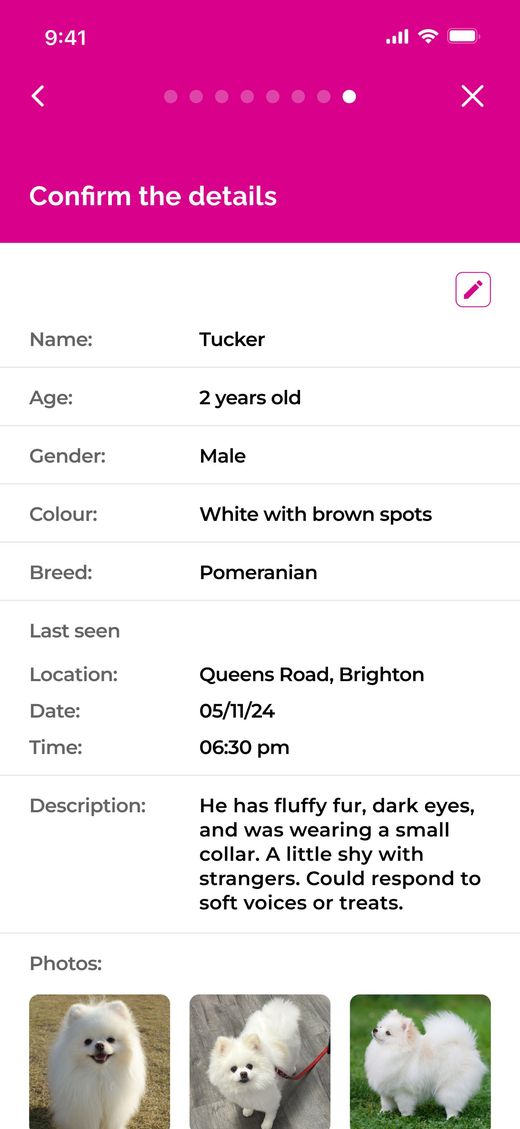
Confirm your pet's details
9:41
Where was your pet last seen?
Enter your location
9:41
When was your pet last seen?
November 2024
:
9:41
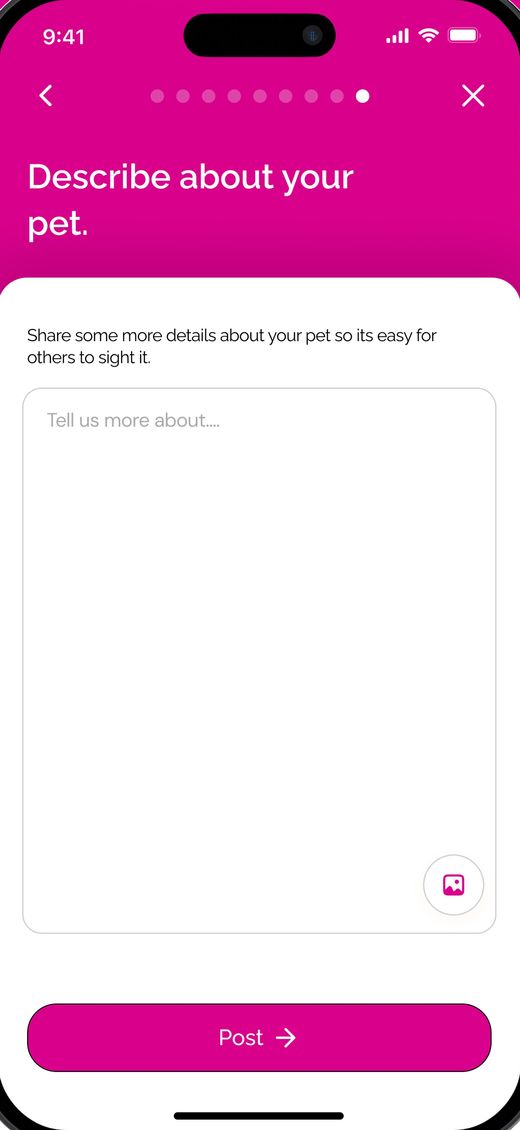
Describe your pet
Write any distinctive features of your pet, or anything that makes the search easier.
0/300
9:41
Upload recent photos of your pet
9:41
Confirm the details
Report submitted
People near Queens Road, Brighton have been alerted.
9:41
AI Vet
Validation
Did the redesign work?
I tested the revised prototype with first-round participants, using the same tasks as before.
What improved
Reporting felt guided, not overwhelming
Breaking the report into short steps meant participants finished it without asking for help, and the review screen caught details they would otherwise have posted wrong.Short steps meant no one needed help, and the review caught mistakes.
Pets were quicker to check
With last seen, location and distance on every card, participants could tell at a glance whether a pet was worth checking. Photo search was the first thing many tried.Last seen and distance on every card made it clear at a glance.
Reaching an owner felt safe
Seeing who posted the report, and messaging them in the app, made people who spotted a pet more comfortable getting in touch than calling a number on a poster.Messaging the owner in the app beat calling a number on a poster.
Reunions closed the loop
People often see a lost pet and never learn whether it made it home. The Reunions tab showed that ending, which made the whole process feel complete and gave participants a real sense of joy.Seeing a pet make it home completed the story and gave people real joy.